Strategic vision
Strategic vision
Strategic vision, Design principles, Concept design, Storytelling
Strategic vision, Design principles, Concept design, Storytelling
Strategic vision, Design principles, Concept design, Storytelling
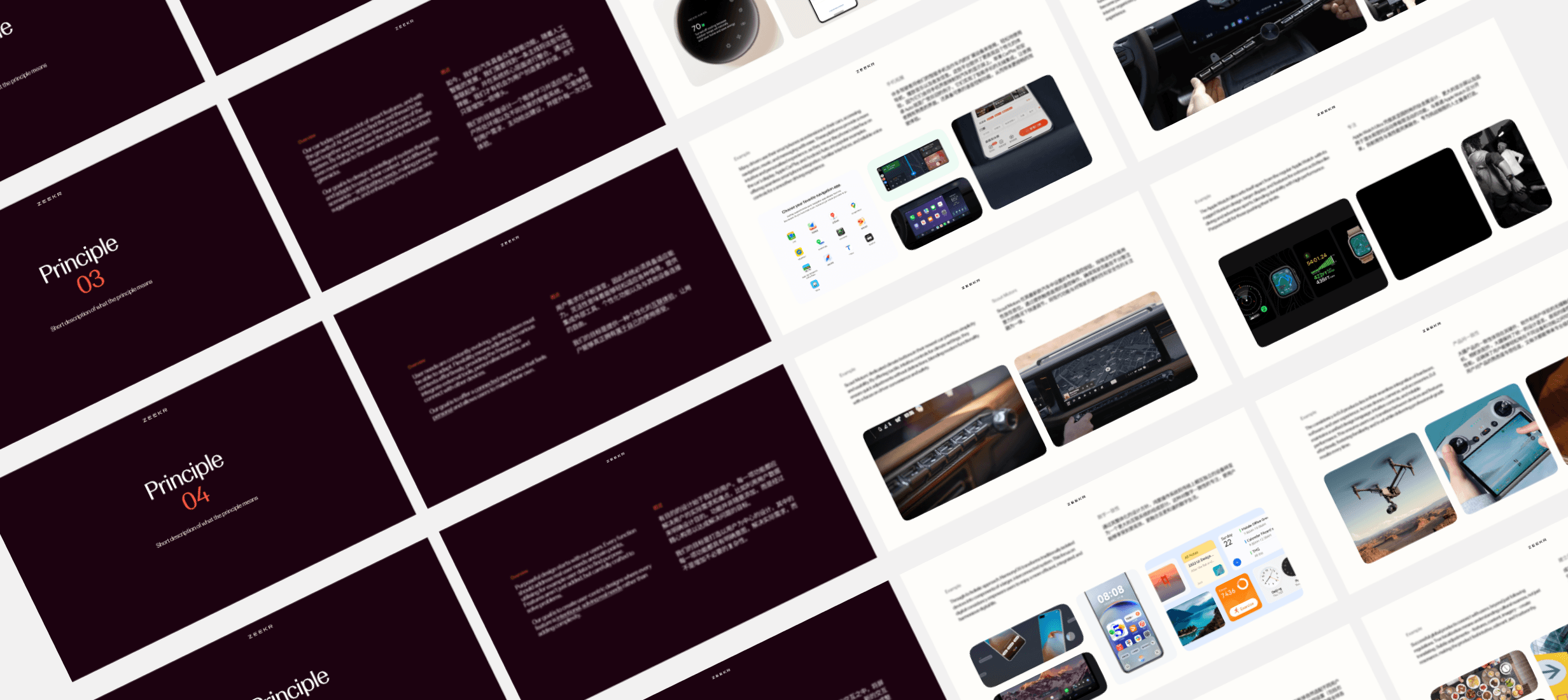
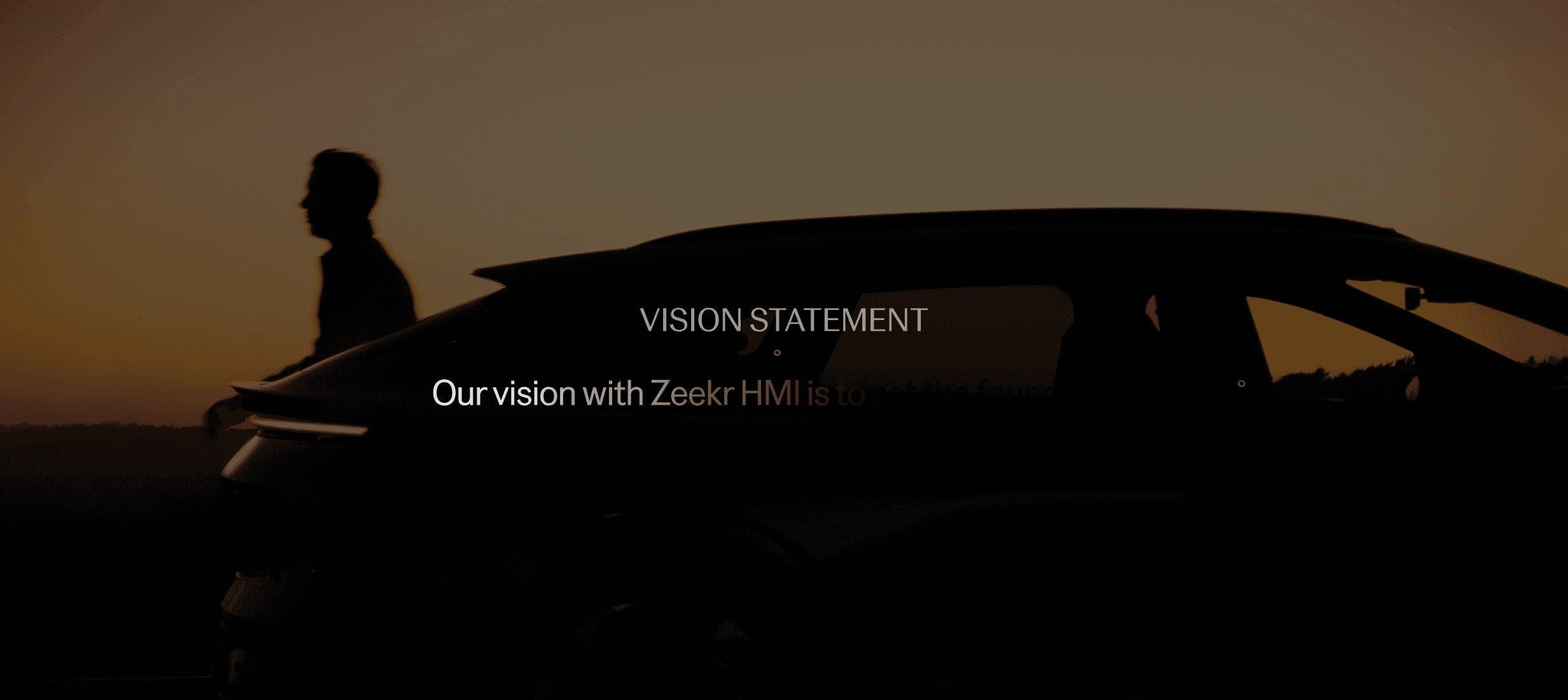
Following the release of Zeekr OS7 we were tasked with designing the next generation of the Zeekr HMI. To frame the scope and set the tone for the whole project we started off with defining the strategy and vision - not only for this new generation but creating the strategic direction for the HMI as a whole for the next years to come.
Following the release of Zeekr OS7 we were tasked with designing the next generation of the Zeekr HMI. To frame the scope and set the tone for the whole project we started off with defining the strategy and vision - not only for this new generation but creating the strategic direction for the HMI as a whole for the next years to come.
Following the release of Zeekr OS7 we were tasked with designing the next generation of the Zeekr HMI. To frame the scope and set the tone for the whole project we started off with defining the strategy and vision - not only for this new generation but creating the strategic direction for the HMI as a whole for the next years to come.
*Material has been redacted due to confidentiality
*Material has been redacted due to confidentiality
*Material has been redacted due to confidentiality
Approach
Approach
For this project we had the opportunity to lay a proper foundation with a lot of time for research, exploration, and strategic direction. We approached it as if we were building a completely new HMI from scratch - combining user feedback with consumer electronics trends and interaction best practices to form our view on the future digital experience.
Our goal was to create well-defined design principles to ground our concept work in, and that would clearly communicate the vision for the experience we want to create for our users with the next Zeekr HMI.
For this project we had the opportunity to lay a proper foundation with a lot of time for research, exploration, and strategic direction. We approached it as if we were building a completely new HMI from scratch - combining user feedback with consumer electronics trends and interaction best practices to form our view on the future digital experience.
Our goal was to create well-defined design principles to ground our concept work in, and that would clearly communicate the vision for the experience we want to create for our users with the next Zeekr HMI.
For this project we had the opportunity to lay a proper foundation with a lot of time for research, exploration, and strategic direction. We approached it as if we were building a completely new HMI from scratch - combining user feedback with consumer electronics trends and interaction best practices to form our view on the future digital experience.
Our goal was to create well-defined design principles to ground our concept work in, and that would clearly communicate the vision for the experience we want to create for our users with the next Zeekr HMI.
Research
Research
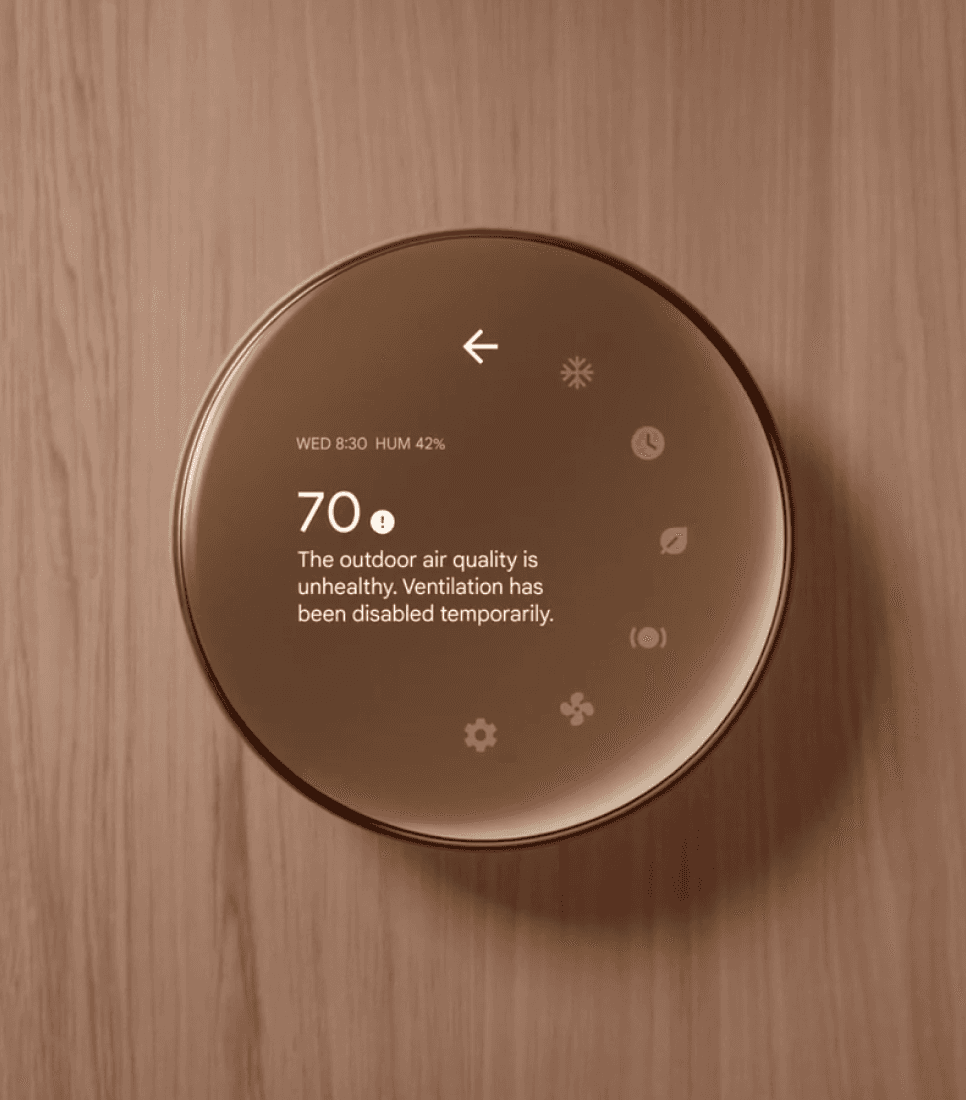
As our target was to explore future trends we looked mainly to consumer electronics and digital trends, rather than just the automotive industry. All input was later combined to find common themes which gave us a direction forward.
As our target was to explore future trends we looked mainly to consumer electronics and digital trends, rather than just the automotive industry. All input was later combined to find common themes which gave us a direction forward.
Challenges
Challenges
This was the first time that this kind of deep strategic work was done within the HMI-team at Zeekr. This meant that we needed to build the bridge while crossing it - a challenge that made us think back at how earlier projects had panned out and how we wanted them to be even better this time.
While Zeekr Design is based in Gothenburg, our counterpart teams responsible for development are working from the HQ in Shanghai, together with all our stakeholders. The vision we created had to resonate with them and show understanding of the Chinese user base to secure buy-in for our final concept.
This was the first time that this kind of deep strategic work was done within the HMI-team at Zeekr. This meant that we needed to build the bridge while crossing it - a challenge that made us think back at how earlier projects had panned out and how we wanted them to be even better this time.
While Zeekr Design is based in Gothenburg, our counterpart teams responsible for development are working from the HQ in Shanghai, together with all our stakeholders. The vision we created had to resonate with them and show understanding of the Chinese user base to secure buy-in for our final concept.
This was the first time that this kind of deep strategic work was done within the HMI-team at Zeekr. This meant that we needed to build the bridge while crossing it - a challenge that made us think back at how earlier projects had panned out and how we wanted them to be even better this time.
While Zeekr Design is based in Gothenburg, our counterpart teams responsible for development are working from the HQ in Shanghai, together with all our stakeholders. The vision we created had to resonate with them and show understanding of the Chinese user base to secure buy-in for our final concept.
Experience framework
Experience framework
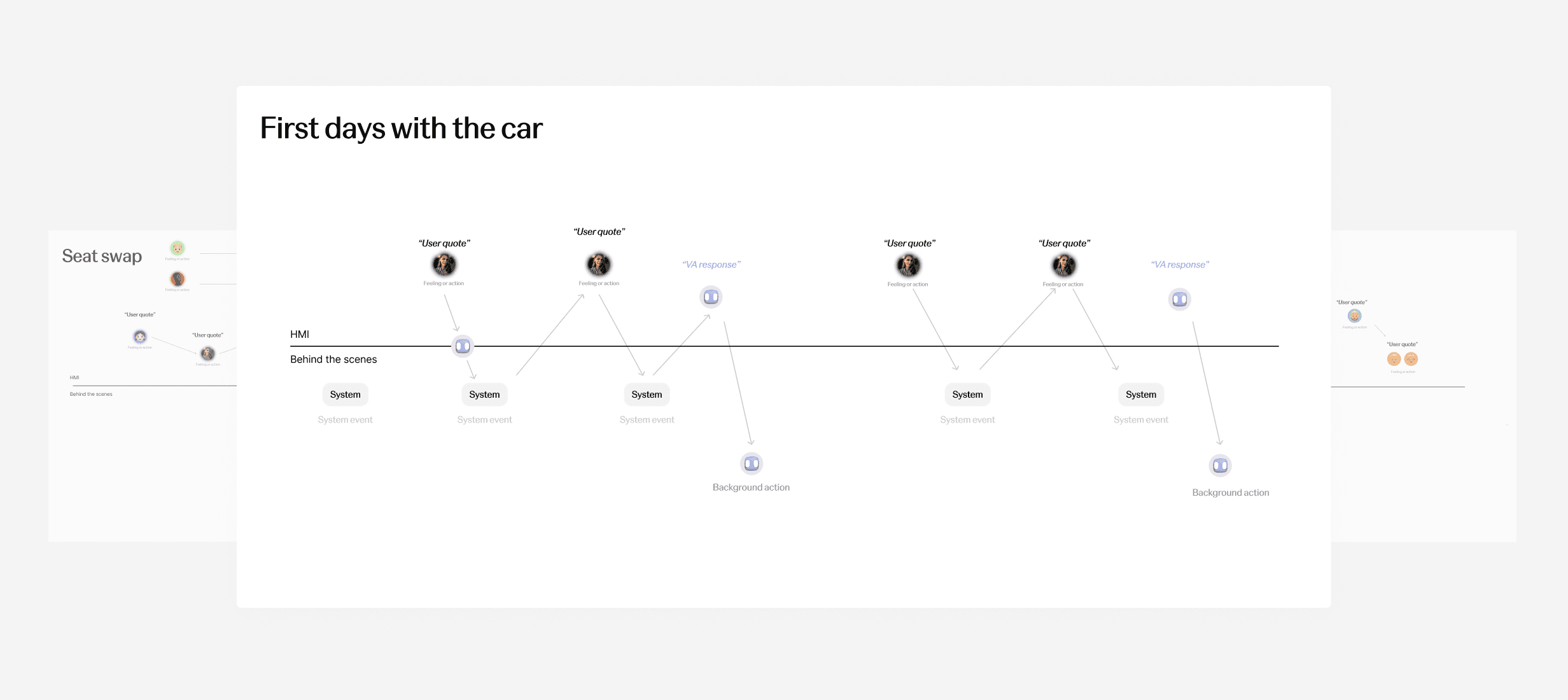
Combining our research output and principles I created a experience framework for mapping out user journeys. The purpose was to define what happens both visually in the HMI and behind the scenes in the system at each interaction. The framework was used as a tool for discussion within the team, allowing us to explore how our design principles would be manifested in the user experience and make sure that it aligned with our vision.
Combining our research output and principles I created a experience framework for mapping out user journeys. The purpose was to define what happens both visually in the HMI and behind the scenes in the system at each interaction. The framework was used as a tool for discussion within the team, allowing us to explore how our design principles would be manifested in the user experience and make sure that it aligned with our vision.
User journeys
User journeys
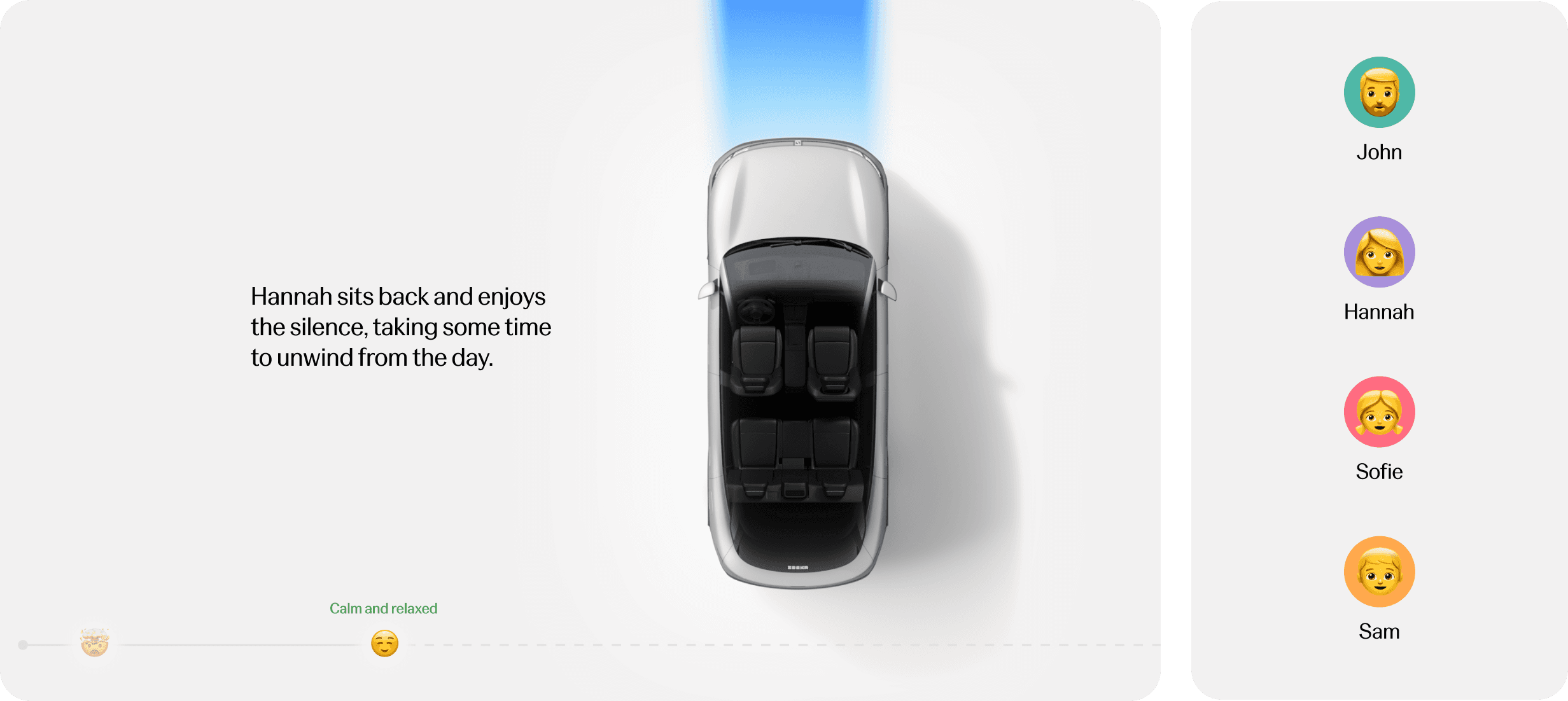
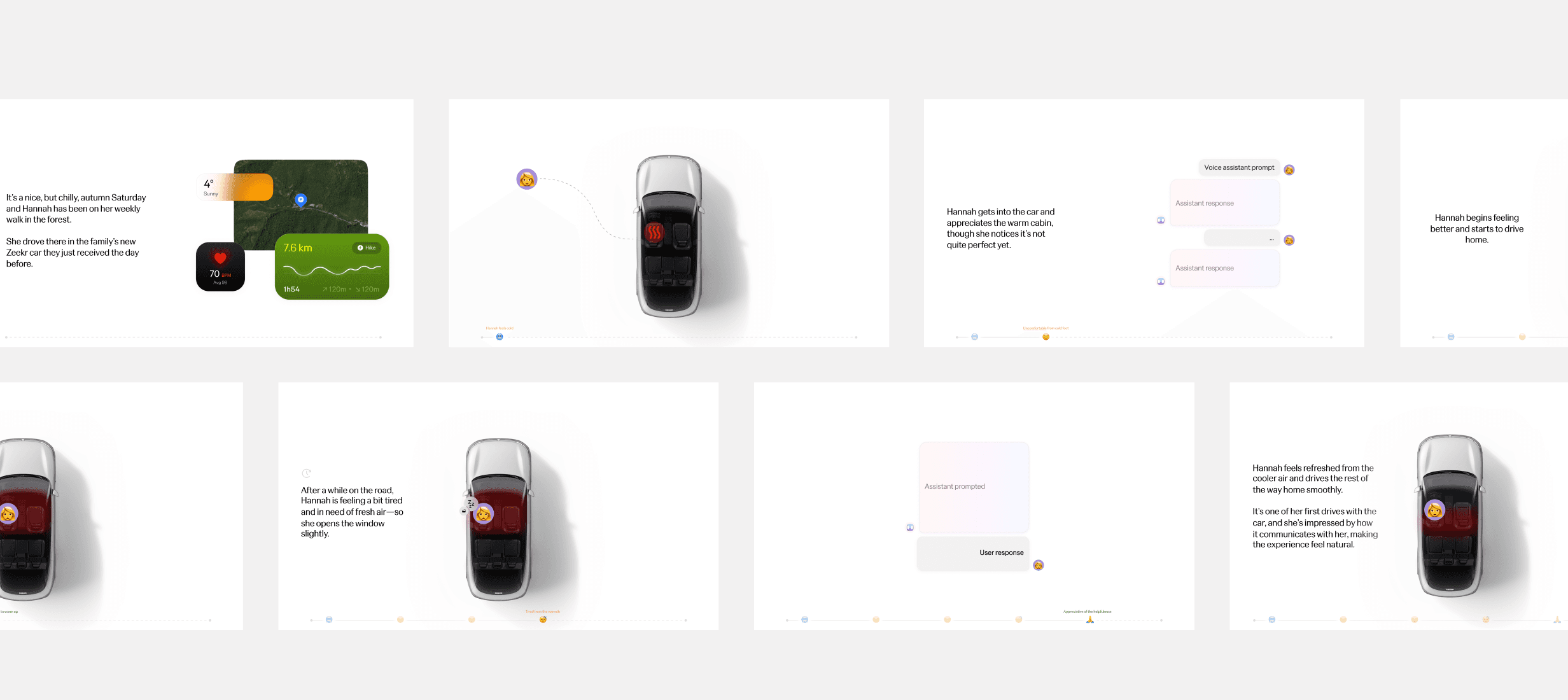
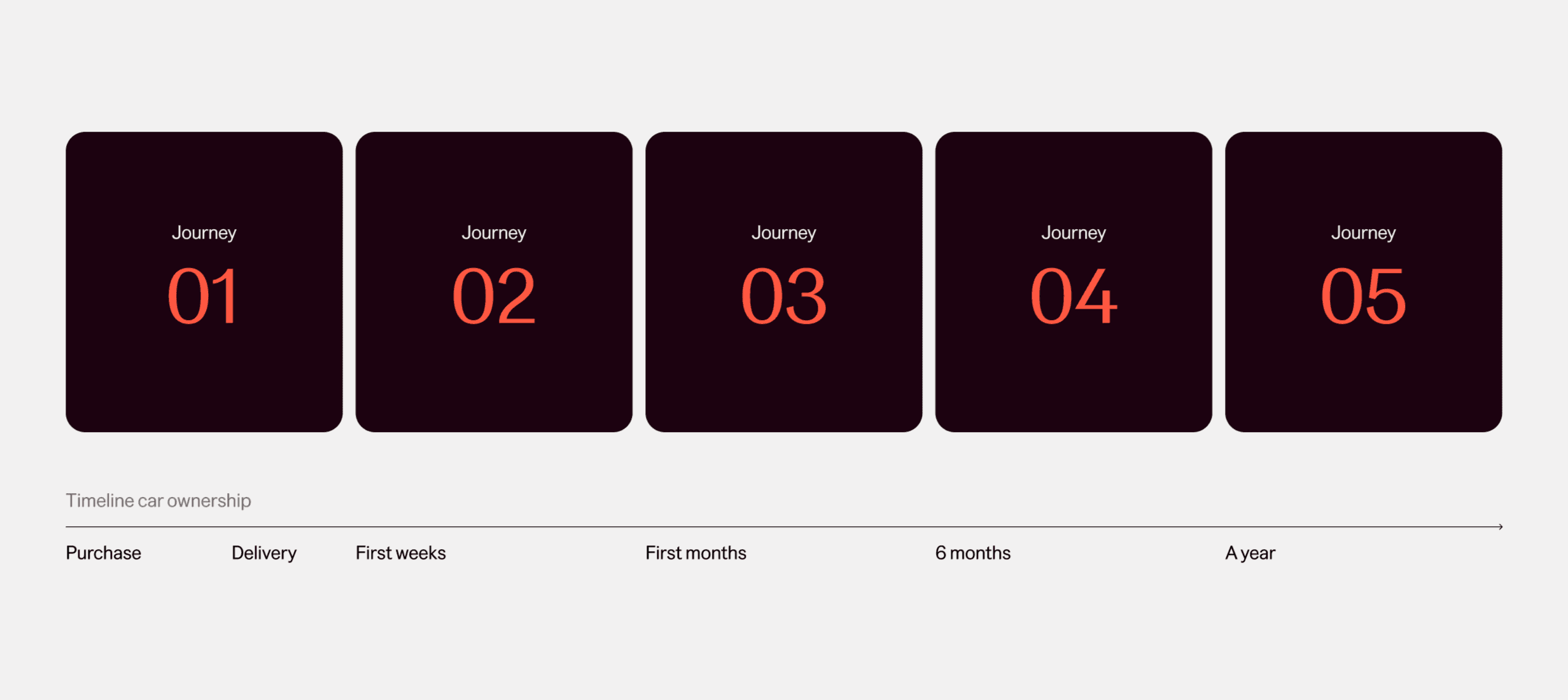
We wanted to build a clear story around our vision to visualize the experience we wanted to create with the new HMI generation. Based on real-life scenarios I defined five user journeys that zoomed in on different points in time of the car ownership. My goal was to illustrate how the experience with the car develops over time.
We focused on making the journeys very visually engaging and story-driven to get all stakeholders into the right mindset. Together, these journeys visualized Zeekr's future, creating a sense of what's coming and a vision that everyone could get excited about.
We wanted to build a clear story around our vision to visualize the experience we wanted to create with the new HMI generation. Based on real-life scenarios I defined five user journeys that zoomed in on different points in time of the car ownership. My goal was to illustrate how the experience with the car develops over time.
We focused on making the journeys very visually engaging and story-driven to get all stakeholders into the right mindset. Together, these journeys visualized Zeekr's future, creating a sense of what's coming and a vision that everyone could get excited about.
We wanted to build a clear story around our vision to visualize the experience we wanted to create with the new HMI generation. Based on real-life scenarios I defined five user journeys that zoomed in on different points in time of the car ownership. My goal was to illustrate how the experience with the car develops over time.
We focused on making the journeys very visually engaging and story-driven to get all stakeholders into the right mindset. Together, these journeys visualized Zeekr's future, creating a sense of what's coming and a vision that everyone could get excited about.
Outcome
Outcome
We delivered a strategic vision anchored by eight design principles that earned buy-in from all stakeholders and teams, with four principles identified as the core focus areas. This created a solid foundation for the entire project moving forward, with clear targets from day one.
My storytelling approach through user journeys proved instrumental in securing stakeholder buy-in, demonstrating how strong narrative can drive alignment in complex technical projects.
We delivered a strategic vision anchored by eight design principles that earned buy-in from all stakeholders and teams, with four principles identified as the core focus areas. This created a solid foundation for the entire project moving forward, with clear targets from day one.
My storytelling approach through user journeys proved instrumental in securing stakeholder buy-in, demonstrating how strong narrative can drive alignment in complex technical projects.