ZeekrOS 7
ZeekrOS 7
Interaction design, UX & UI, Framework & interaction model, Design system, Stakeholder communication
Interaction design, UX & UI, Framework & interaction model, Design system, Stakeholder communication
Interaction design, UX & UI, Framework & interaction model, Design system, Stakeholder communication
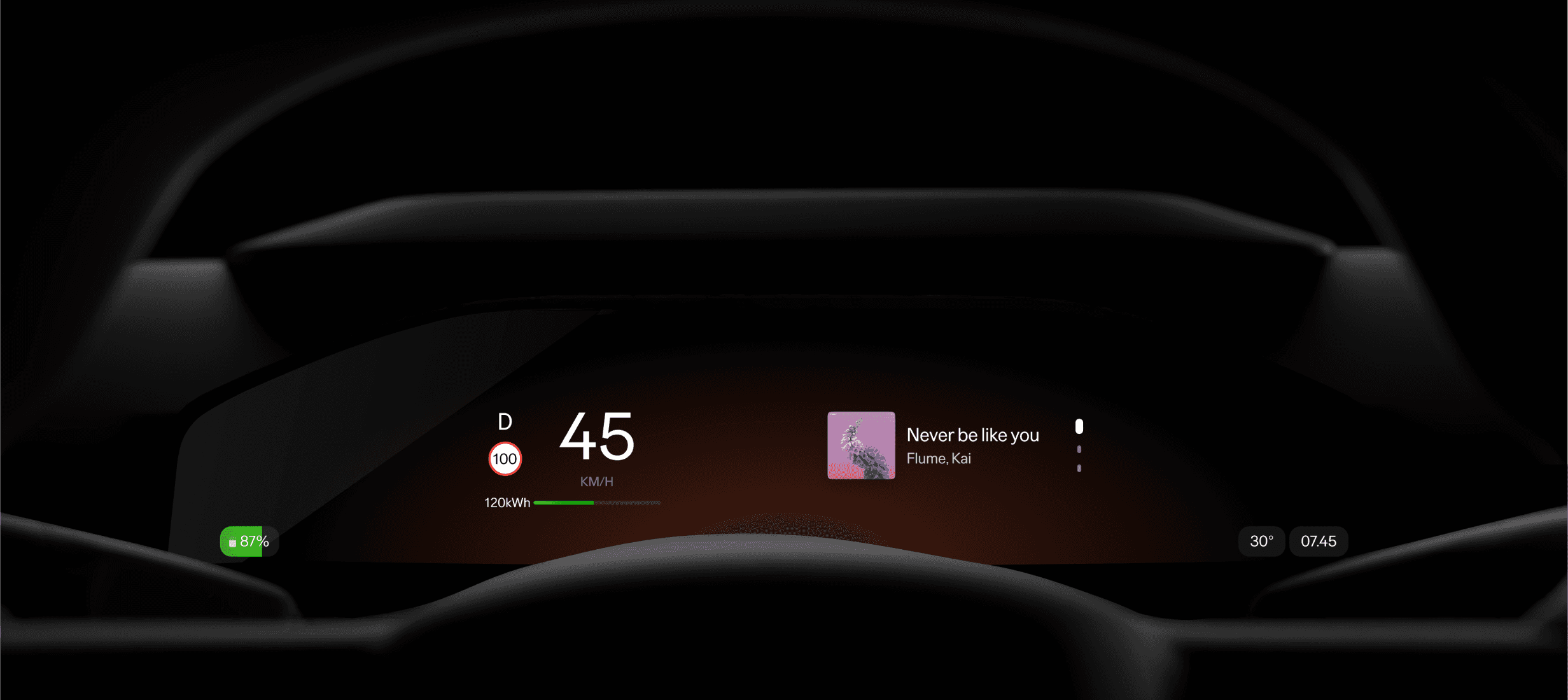
We were tasked with redesign of the cockpit experience for the driver display. The main goal was to enable new, advanced driver functionality while maintaining the existing interaction model, keeping a sense of familiarity for our users.
We were tasked with redesign of the cockpit experience for the driver display. The main goal was to enable new, advanced driver functionality while maintaining the existing interaction model, keeping a sense of familiarity for our users.
We were tasked with redesign of the cockpit experience for the driver display. The main goal was to enable new, advanced driver functionality while maintaining the existing interaction model, keeping a sense of familiarity for our users.
Approach
Approach
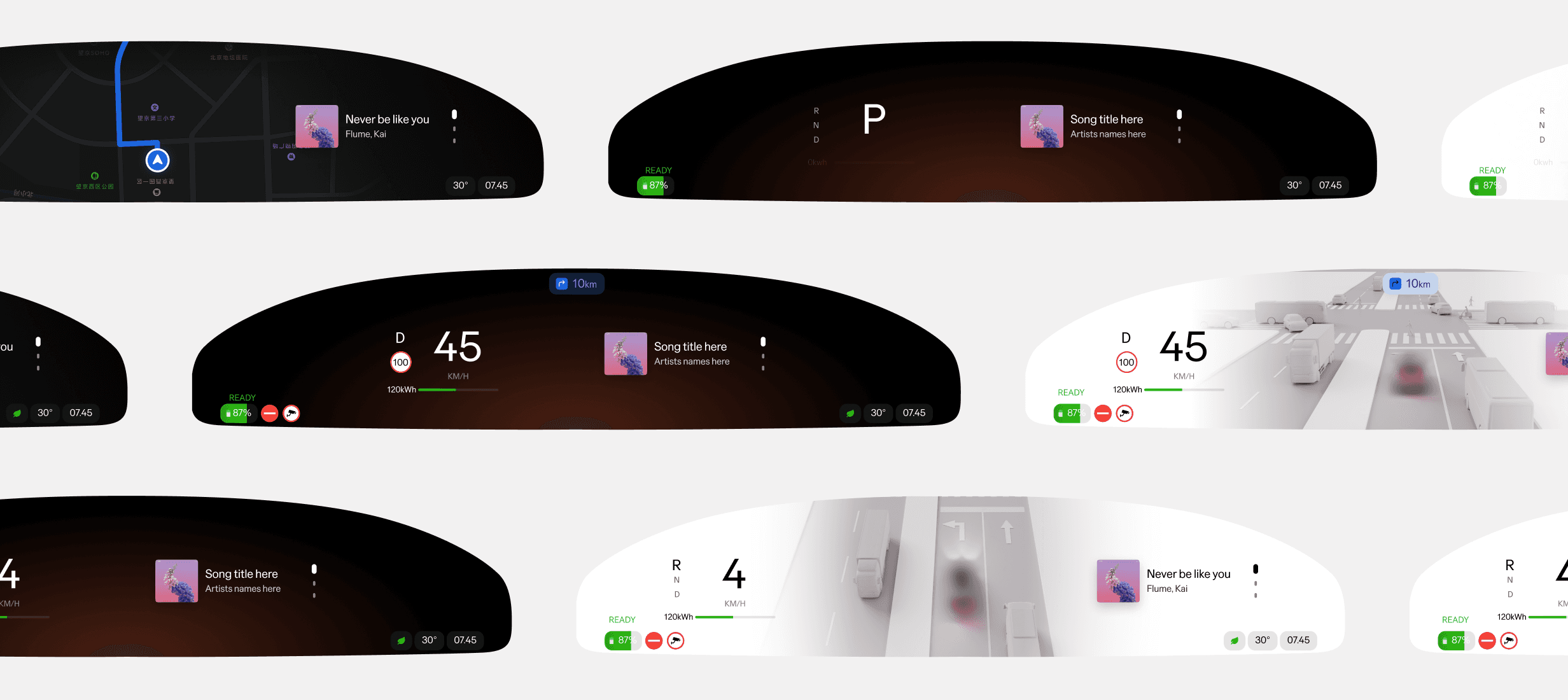
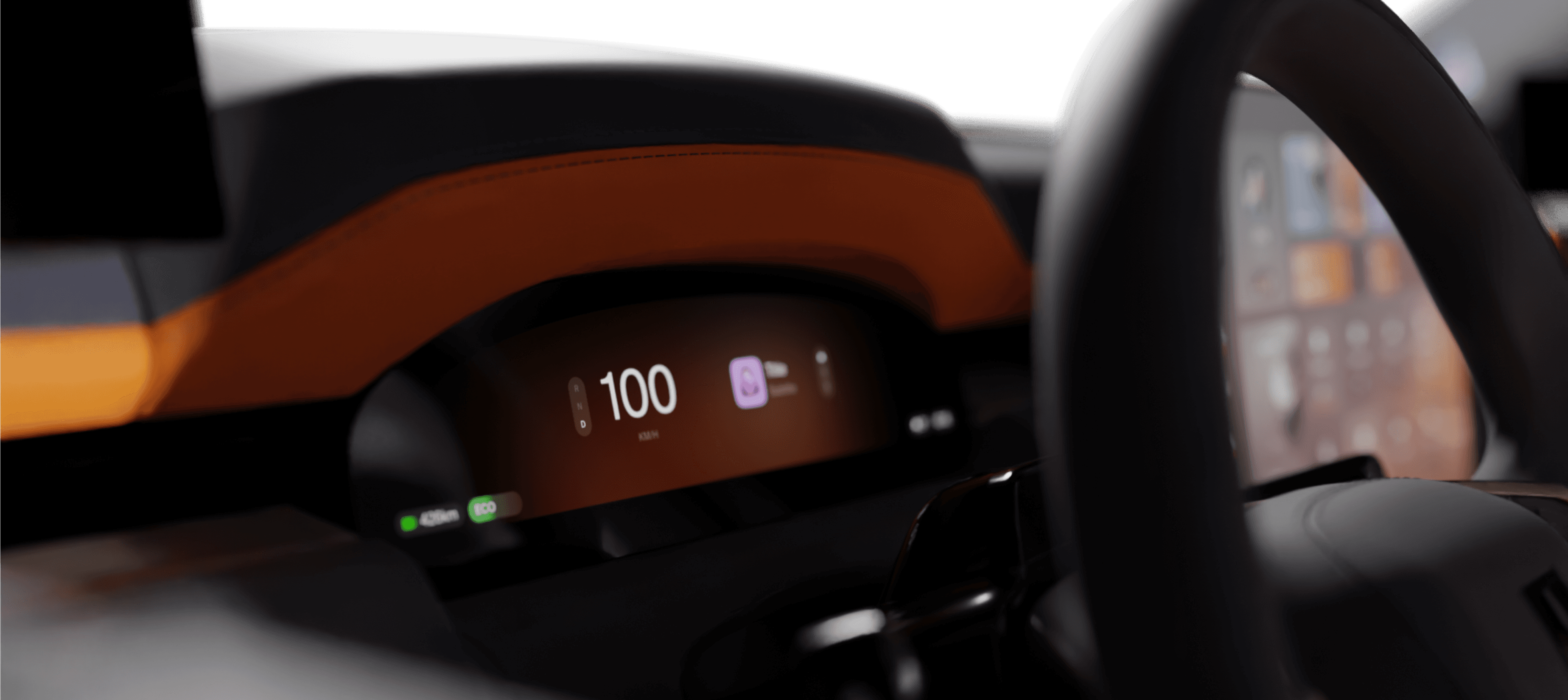
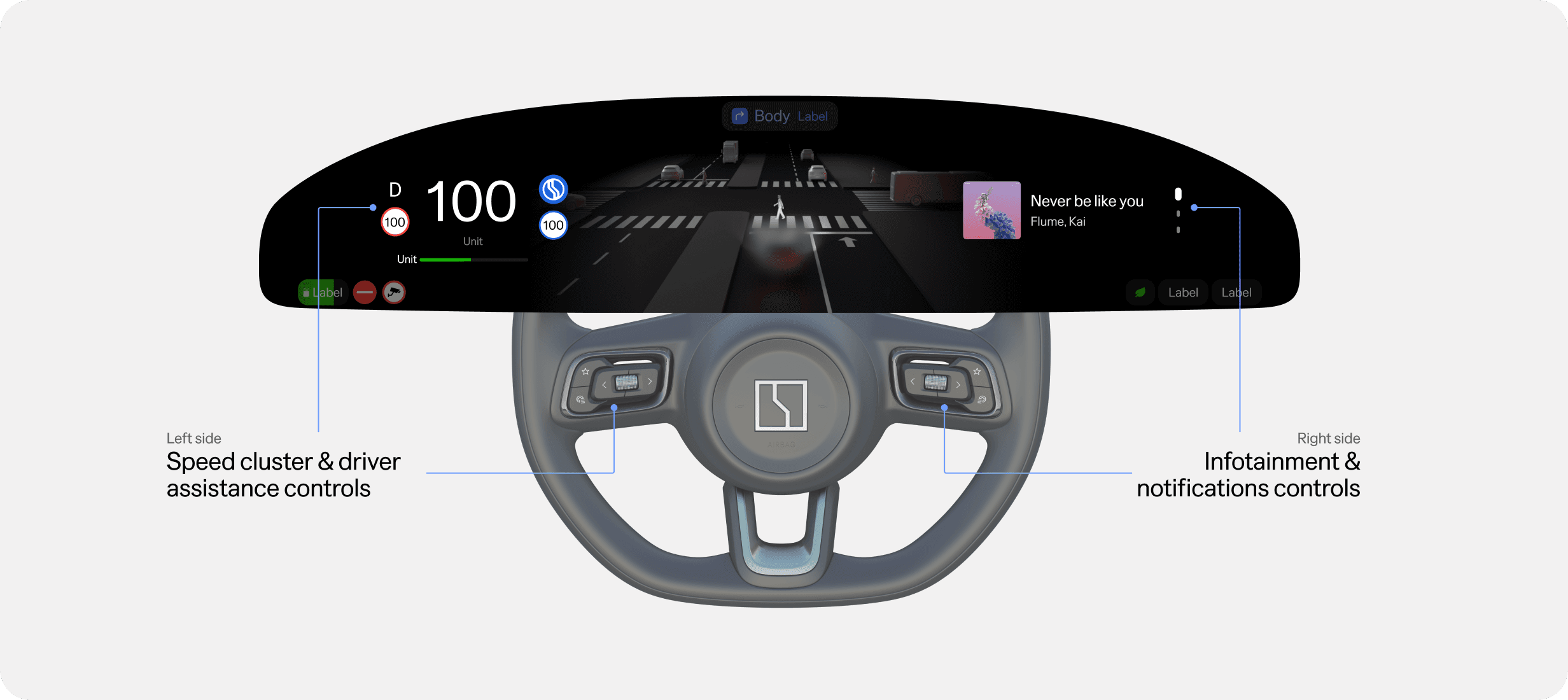
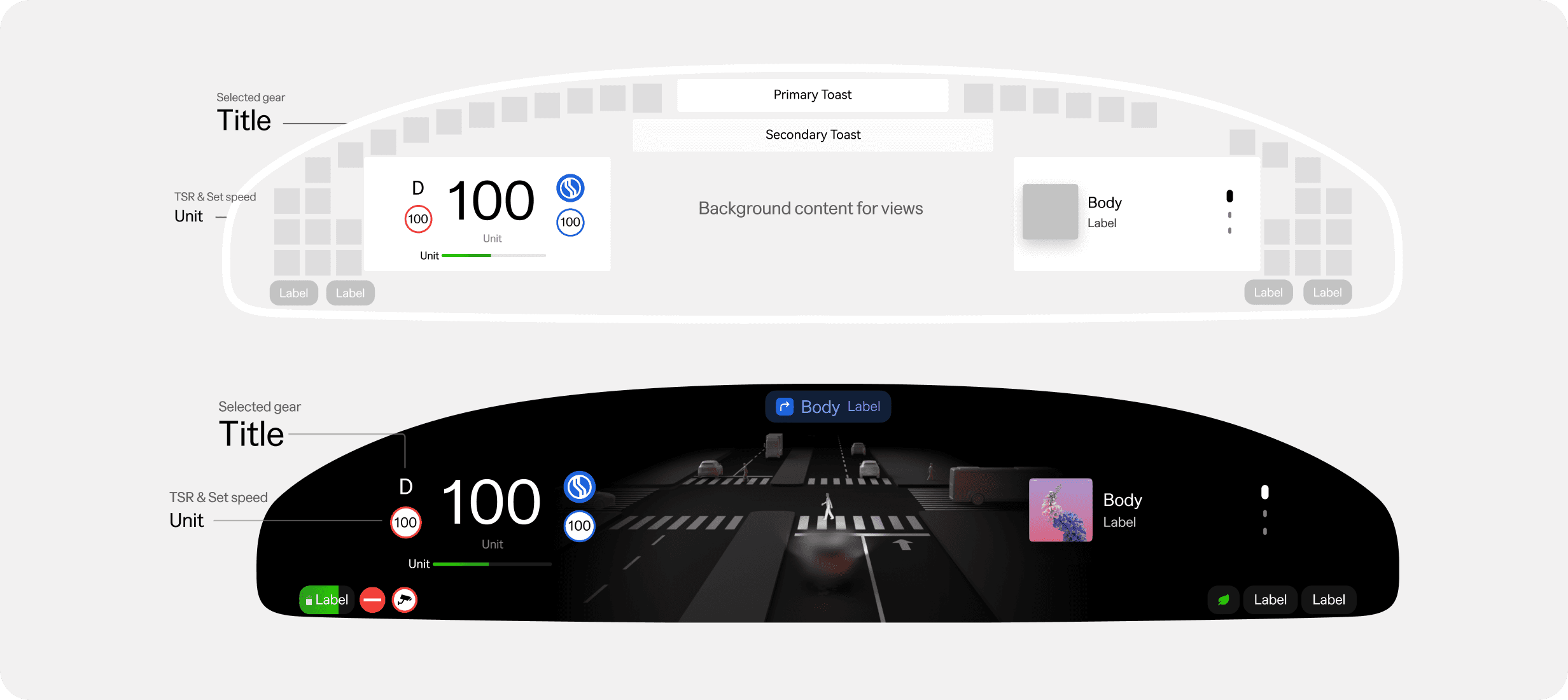
Starting out, this project was supposed to be a smaller update to add new functionality and align the driver display with the larger update on the rest of the system. We took this as an opportunity to make structural improvements that we had identified during previous work, aligning the information more closely to the interaction model of the steering wheel and create clearly defined areas for different types of content.
From these smaller improvements we eventually gained trust with our stakeholders to make a larger update to the whole display structure.
Starting out, this project was supposed to be a smaller update to add new functionality and align the driver display with the larger update on the rest of the system. We took this as an opportunity to make structural improvements that we had identified during previous work, aligning the information more closely to the interaction model of the steering wheel and create clearly defined areas for different types of content.
From these smaller improvements we eventually gained trust with our stakeholders to make a larger update to the whole display structure.
Challenges
Challenges
The driver display is the primary area for critical information while driving, so the informations always needs to be very clear and easy to glance at. This project came with the main objective of adding more advanced driver assistance functionality into the driver display. This put a lot of requirements on creating a reliable experience for our users - making sure they always feel safe and understand what is going on.
This was a platform solution for a wide range of vehicles that all have different functionality and different target users. The design we created had to be scalable from a small city SUV and a 7-seater hybrid off-road vehicle, while also staying consistent and balanced.
The driver display is the primary area for critical information while driving, so the informations always needs to be very clear and easy to glance at. This project came with the main objective of adding more advanced driver assistance functionality into the driver display. This put a lot of requirements on creating a reliable experience for our users - making sure they always feel safe and understand what is going on.
This was a platform solution for a wide range of vehicles that all have different functionality and different target users. The design we created had to be scalable from a small city SUV and a 7-seater hybrid off-road vehicle, while also staying consistent and balanced.
Introducing NZP
Introducing NZP
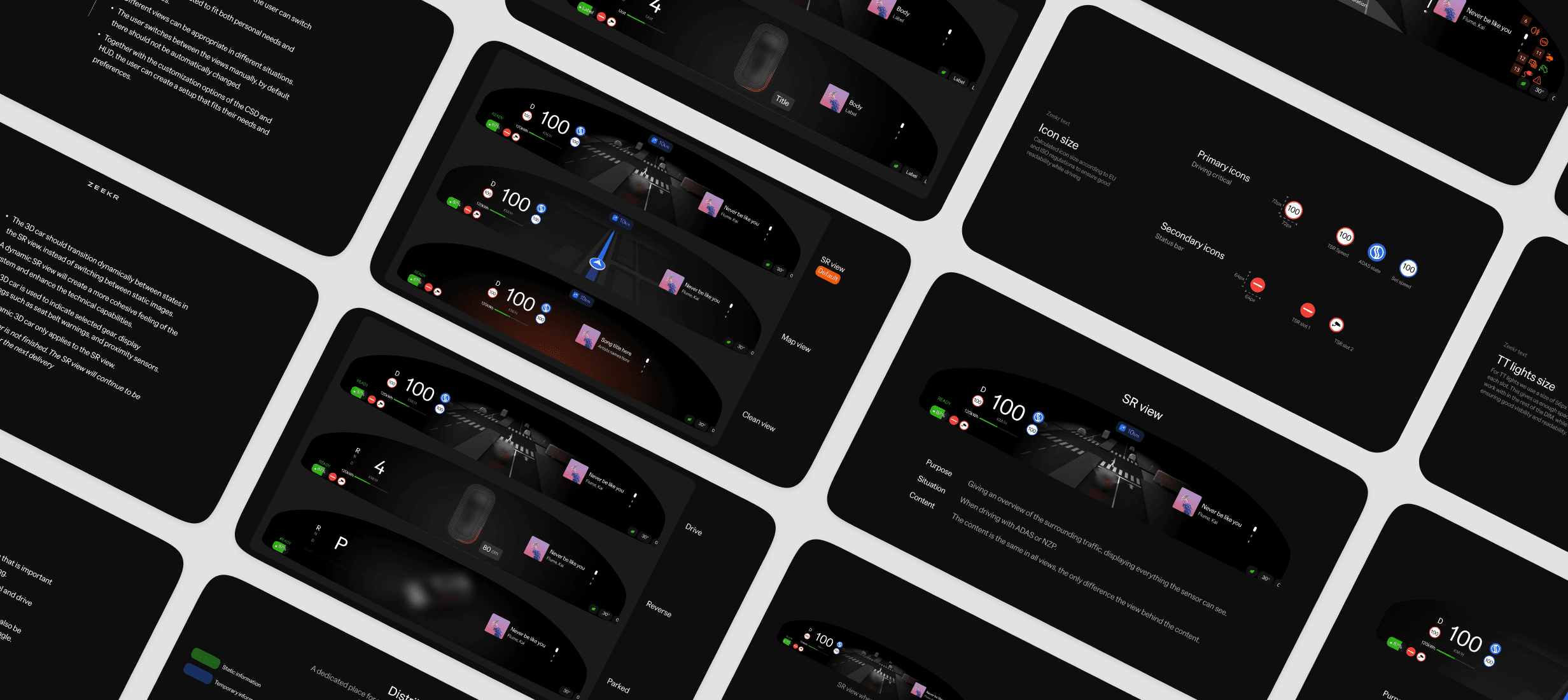
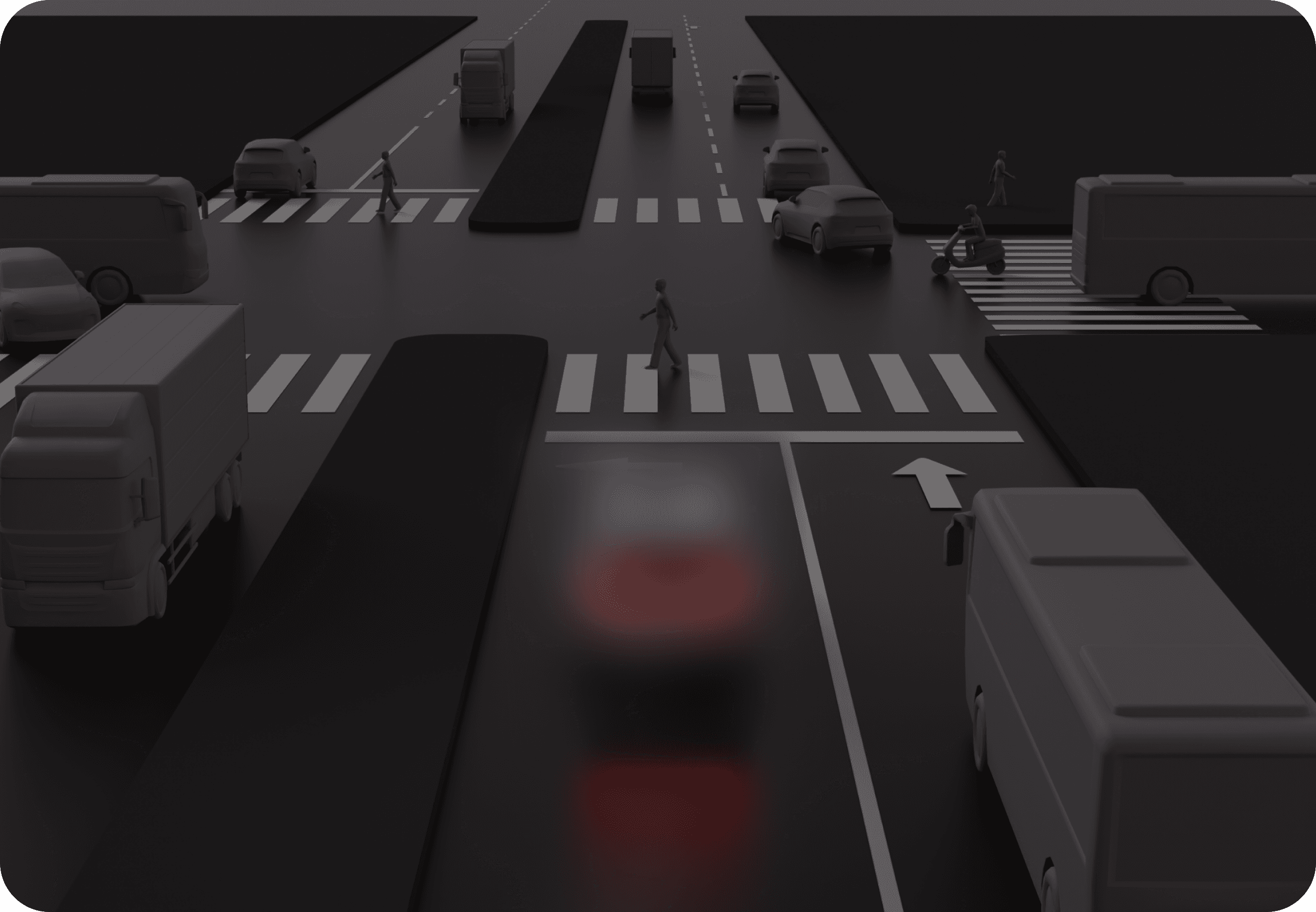
Implementation of NZP, Zeekr’s auto pilot, meant that drivers would get advanced assistance information through what is called the SR view - Surrounded Reality. Essentially a 3D environment where everything the car “sees” is visualised to communicate every action the car will take to the driver.
Implementation of NZP, Zeekr’s auto pilot, meant that drivers would get advanced assistance information through what is called the SR view - Surrounded Reality. Essentially a 3D environment where everything the car “sees” is visualised to communicate every action the car will take to the driver.
Enabling advanced functionality
Enabling advanced functionality
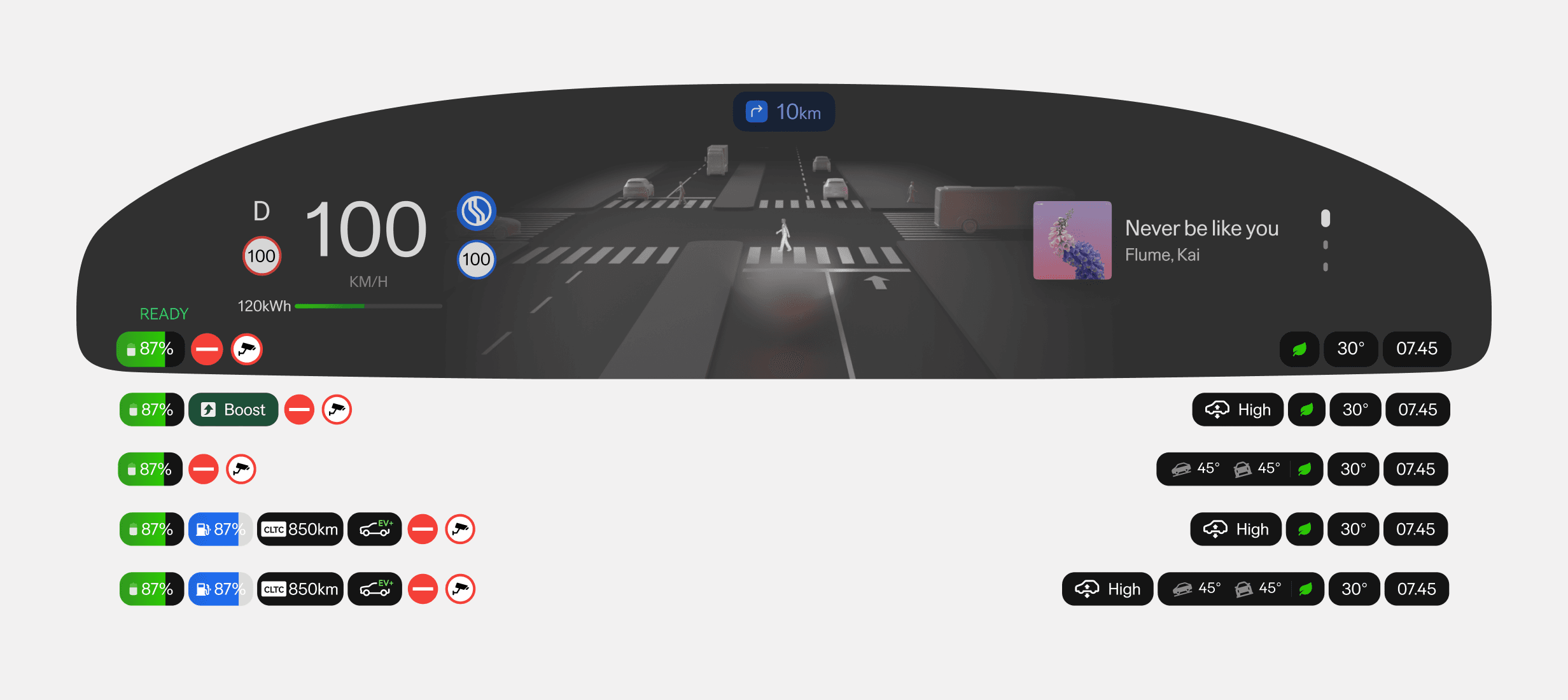
Having the SR view as the background in the driver display meant that there would be a lot of content only from the background - every detail around the car is visualized. Because of this the rest of the content needed to be designed in a way that would not overload the user with information and increase their cognitive load.
Having the SR view as the background in the driver display meant that there would be a lot of content only from the background - every detail around the car is visualized. Because of this the rest of the content needed to be designed in a way that would not overload the user with information and increase their cognitive load.
Consistency across vehicles
Consistency across vehicles
To achieve a consistent and scalable design we needed to fully understand the functionality and all elements in the display. Following our overall strategy for the driver display we created clear groups of content categories that would help users quickly scan for information without taking their focus from the road.
To achieve a consistent and scalable design we needed to fully understand the functionality and all elements in the display. Following our overall strategy for the driver display we created clear groups of content categories that would help users quickly scan for information without taking their focus from the road.
Testing
Testing
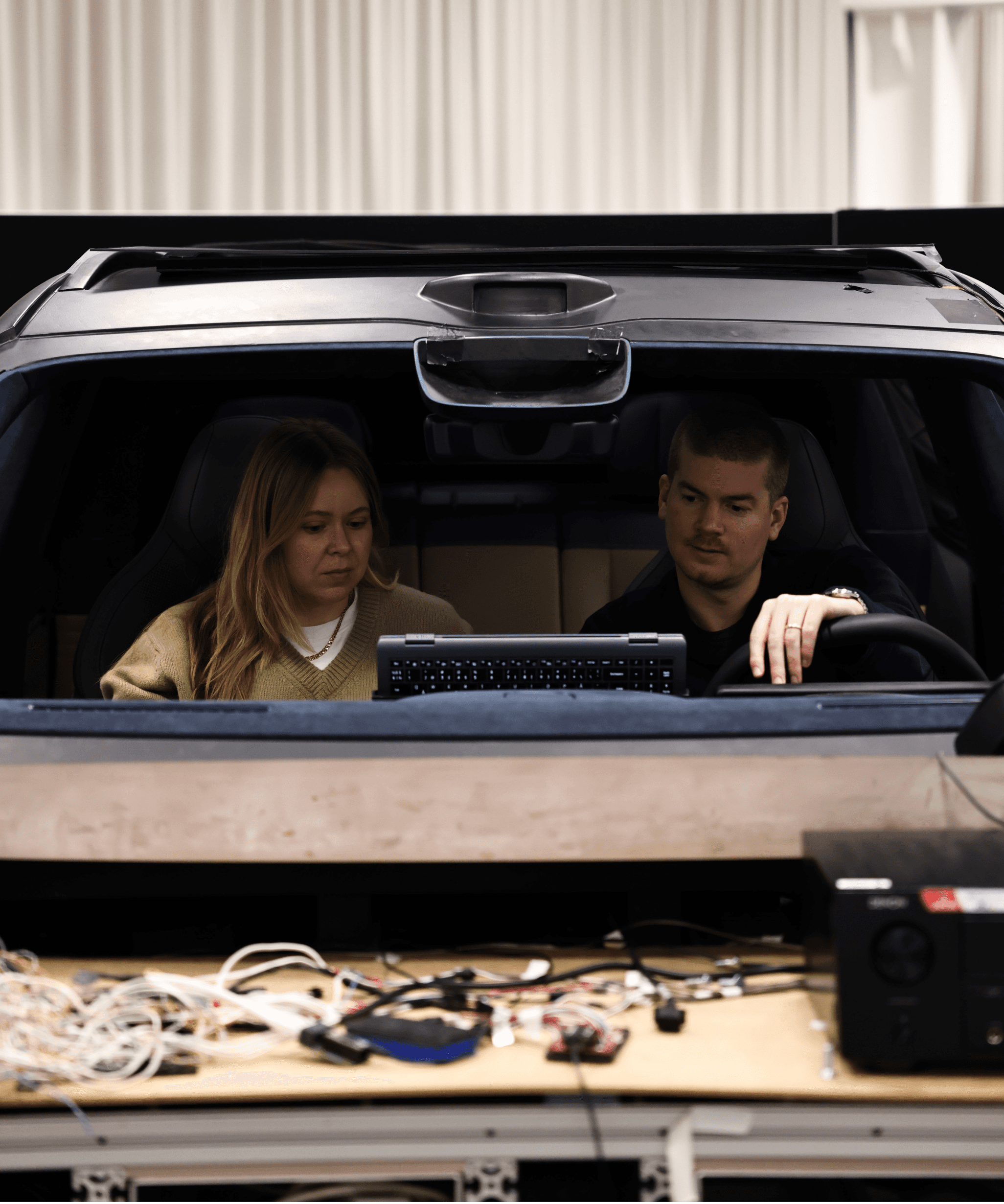
Throughout this project testing was done continuously, ranging from very simple paper cutouts on a static screen to advanced test with real motion driving simulators, all depending on the situation. If something just needed a quick validation I went out with a car and a phone to experience the concept in a real scenario.
It also required more advanced testing for final evaluations, doing usability testing in big motion simulators where users got to go through common scenarios and be as close to a real experience as possible.
Throughout this project testing was done continuously, ranging from very simple paper cutouts on a static screen to advanced test with real motion driving simulators, all depending on the situation. If something just needed a quick validation I went out with a car and a phone to experience the concept in a real scenario.
It also required more advanced testing for final evaluations, doing usability testing in big motion simulators where users got to go through common scenarios and be as close to a real experience as possible.
Communicating with stakeholders
Communicating with stakeholders
During the process I set up and led weekly working meetings with stakeholders where I could advocate for our ideas, facilitate discussions, and push decisions forward. I also created a shared structure for tracking and following up on decisions so everyone stayed on the same page.
During the process I set up and led weekly working meetings with stakeholders where I could advocate for our ideas, facilitate discussions, and push decisions forward. I also created a shared structure for tracking and following up on decisions so everyone stayed on the same page.
Outcome
Outcome
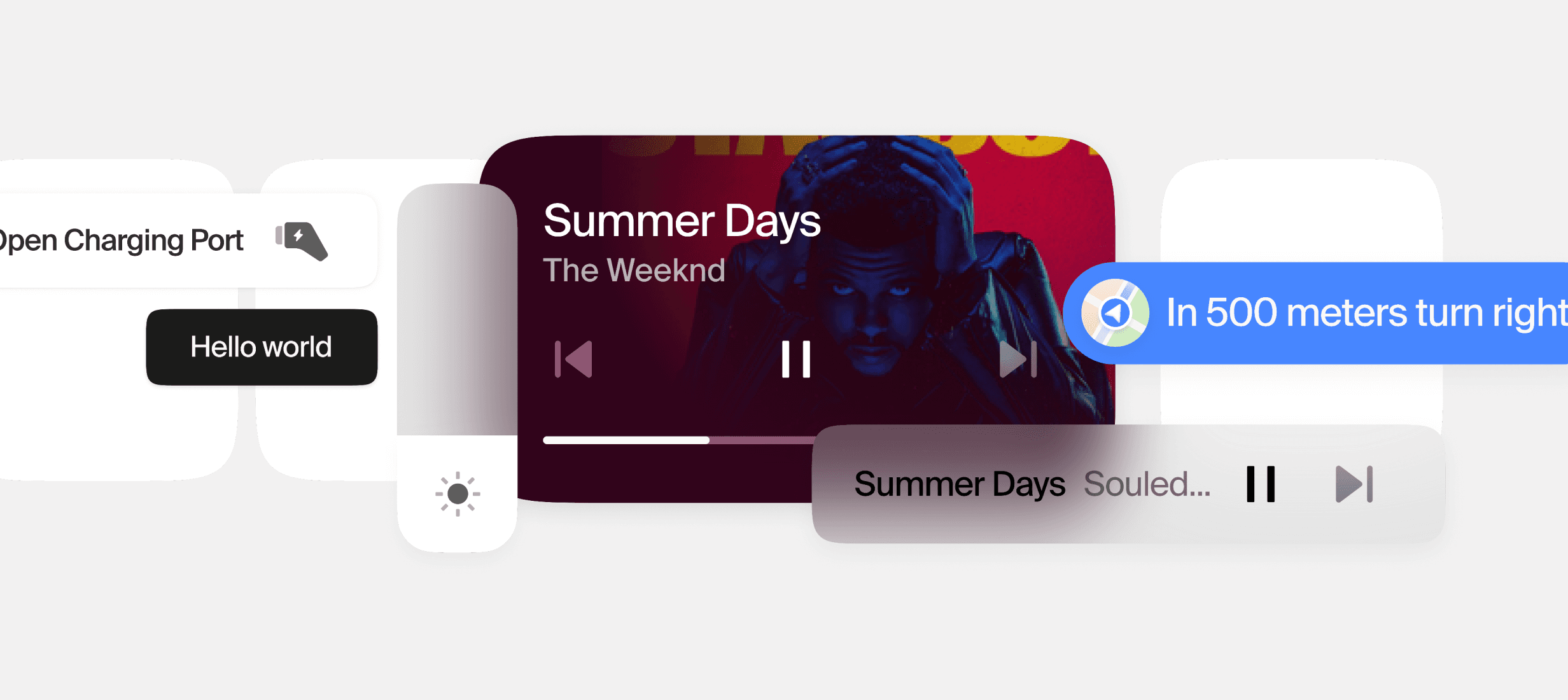
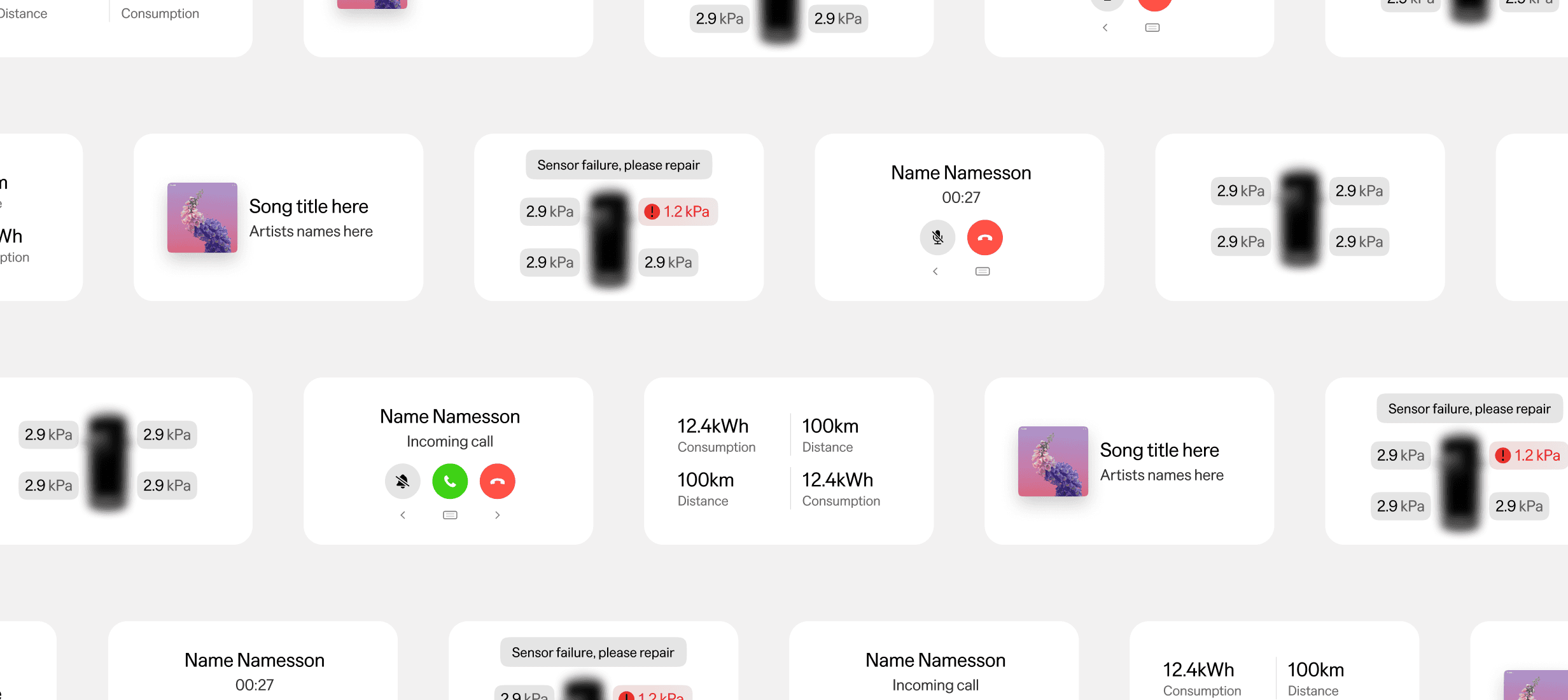
We delivered a redefined information structure for the driver display with a clearer, more balanced layout that works seamlessly with the existing interaction model while reducing driver distraction. This included a complete interaction framework mapping out every screen state, transition, and interaction, which we handed off to the design and development teams in China for implementation. We also built out a full component library of dynamic, reusable UI elements for the design system.
As a bonus, the collaboration strengthened our relationship with the Chinese team and stakeholders, making future work together much smoother.
We delivered a redefined information structure for the driver display with a clearer, more balanced layout that works seamlessly with the existing interaction model while reducing driver distraction. This included a complete interaction framework mapping out every screen state, transition, and interaction, which we handed off to the design and development teams in China for implementation. We also built out a full component library of dynamic, reusable UI elements for the design system.
As a bonus, the collaboration strengthened our relationship with the Chinese team and stakeholders, making future work together much smoother.