Ergonomic study
Ergonomic study
Ergonomic study, Usability testing, UX & UI, Information structure
Ergonomic study, Usability testing, UX & UI, Information structure
Ergonomic study, Usability testing, UX & UI, Information structure
An exploratory research study evaluating the ergonomics and experience, and defining requirements for a new driver display concept.
An exploratory research study evaluating the ergonomics and experience, and defining requirements for a new driver display concept.
An exploratory research study evaluating the ergonomics and experience, and defining requirements for a new driver display concept.
Approach
Approach
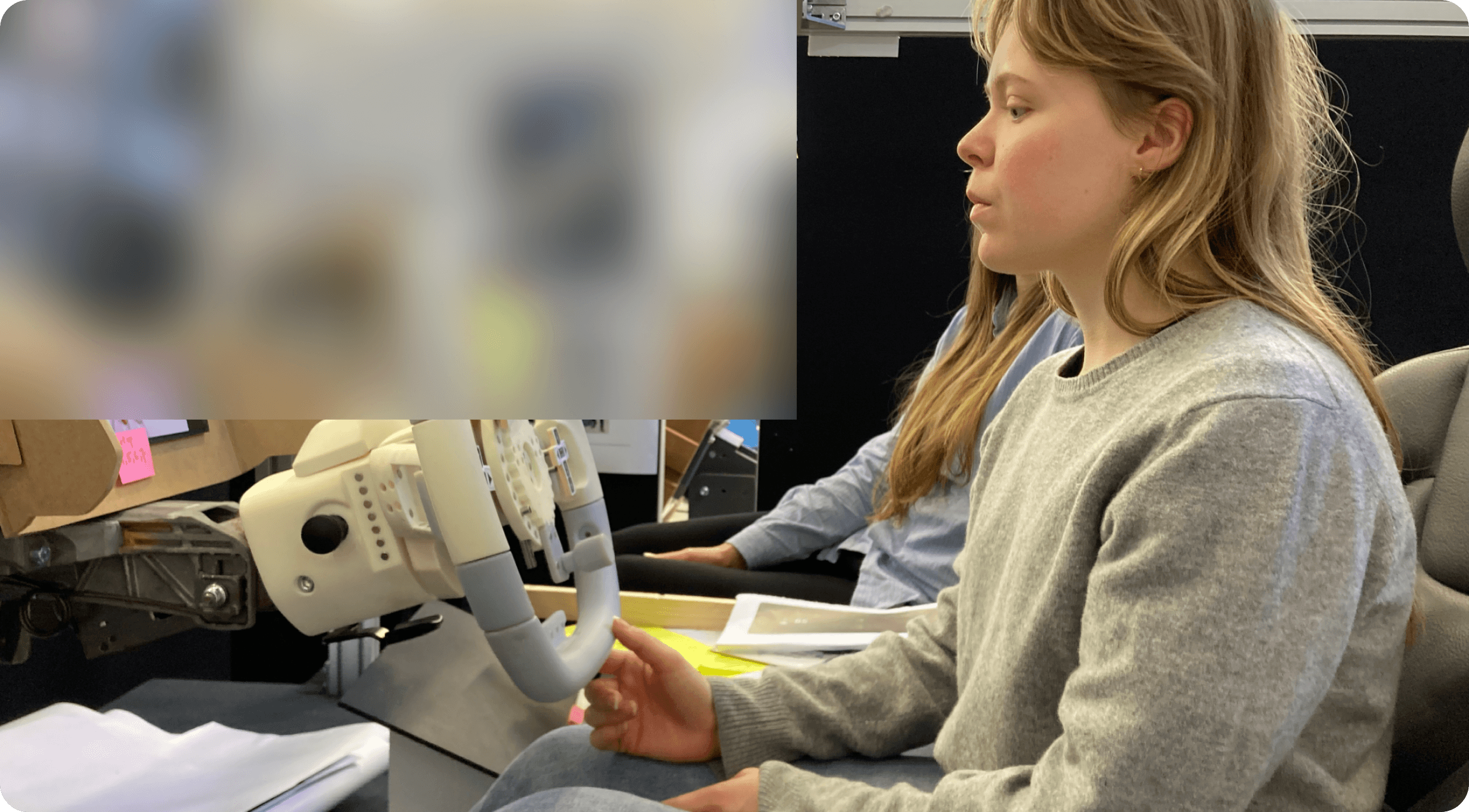
Needing to define all of the parameters for the concept I systematically performed usability tests to narrow down on the requirements.
Starting with simple paper prototypes in the studio rig I could establish a target size, before moving on to lo-fi prototypes mounted in the car in order to determine position, glanceability and interaction. Lastly I performed driving tests to evaluate the information distribution and experience while driving.
Needing to define all of the parameters for the concept I systematically performed usability tests to narrow down on the requirements.
Starting with simple paper prototypes in the studio rig I could establish a target size, before moving on to lo-fi prototypes mounted in the car in order to determine position, glanceability and interaction. Lastly I performed driving tests to evaluate the information distribution and experience while driving.
Challenges
Challenges
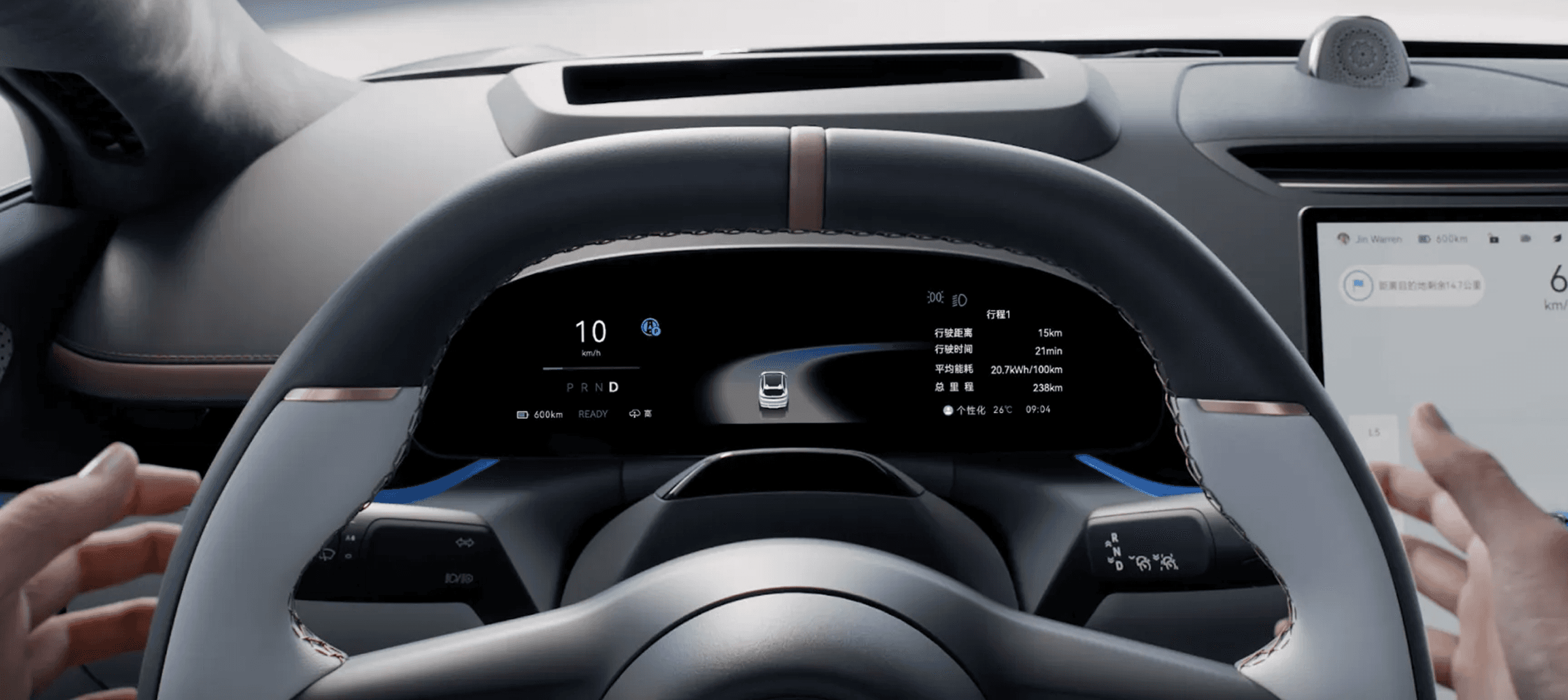
This screen concept came with quite big limitations on information density compared to what we'd used before. We needed to find the best solution for screen size, position, and interaction framework - it needed to feel safe while driving and provide enough information, while also being feasible within the parameters set by the interior design team.
To be able to properly evaluate these parameters we had to validate it in real driving scenarios. This meant we needed to find a way to create a prototype that was connected to the car signals and steering wheel input to make sure it was safe and usable while driving.
This screen concept came with quite big limitations on information density compared to what we'd used before. We needed to find the best solution for screen size, position, and interaction framework - it needed to feel safe while driving and provide enough information, while also being feasible within the parameters set by the interior design team.
To be able to properly evaluate these parameters we had to validate it in real driving scenarios. This meant we needed to find a way to create a prototype that was connected to the car signals and steering wheel input to make sure it was safe and usable while driving.
This screen concept came with quite big limitations on information density compared to what we'd used before. We needed to find the best solution for screen size, position, and interaction framework - it needed to feel safe while driving and provide enough information, while also being feasible within the parameters set by the interior design team.
To be able to properly evaluate these parameters we had to validate it in real driving scenarios. This meant we needed to find a way to create a prototype that was connected to the car signals and steering wheel input to make sure it was safe and usable while driving.
Prototyping
Prototyping
Together with a developer I created a simple prototype on a phone that could be mounted in front of the driver and connected to the car signals. It also responded to steering wheel interactions. This allowed us to safely test the concept in a realistic environment, and evaluate how the information and design was experienced in real scenarios.
Together with a developer I created a simple prototype on a phone that could be mounted in front of the driver and connected to the car signals. It also responded to steering wheel interactions. This allowed us to safely test the concept in a realistic environment, and evaluate how the information and design was experienced in real scenarios.
Eye tracking
Eye tracking
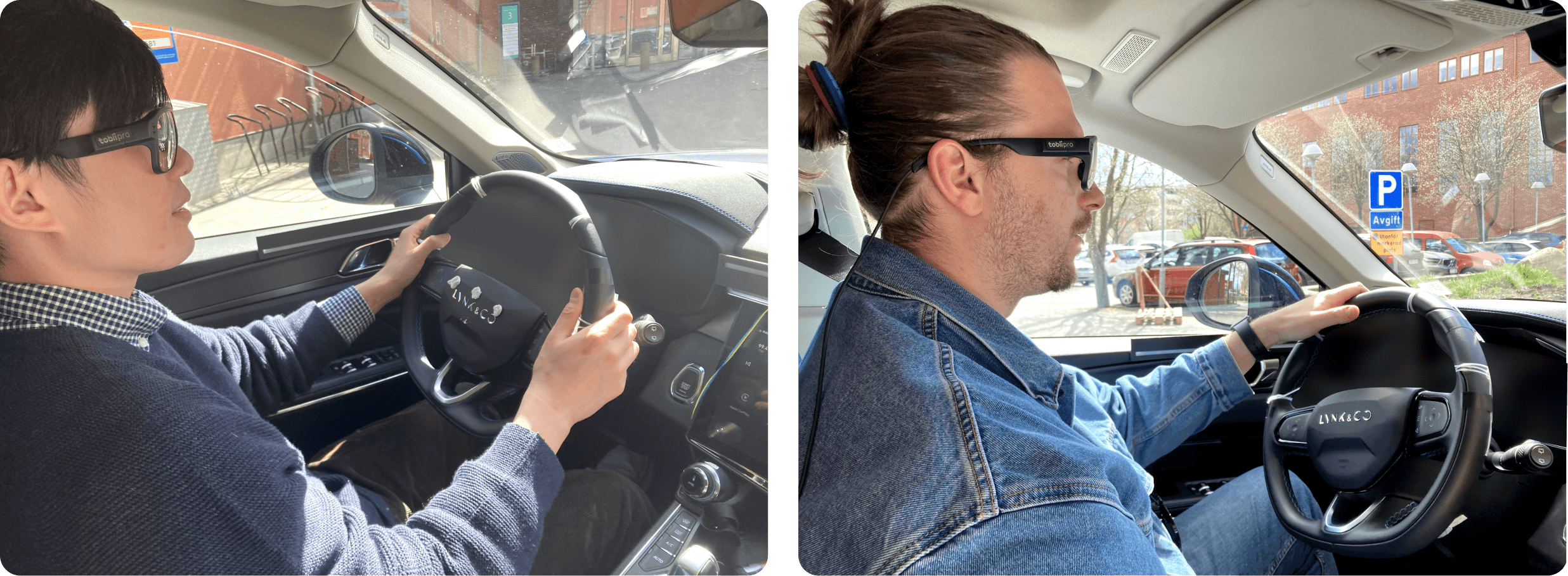
Throughout the study, I used eye tracking glasses to get insight into when and where users were looking in different driving scenarios. Understanding how much drivers needed to search for information, and measure time spent looking away from the road, are two important metrics to consider when developing driver displays.
Throughout the study, I used eye tracking glasses to get insight into when and where users were looking in different driving scenarios. Understanding how much drivers needed to search for information, and measure time spent looking away from the road, are two important metrics to consider when developing driver displays.
Analysing gaze patters & test data
Analysing gaze patters & test data
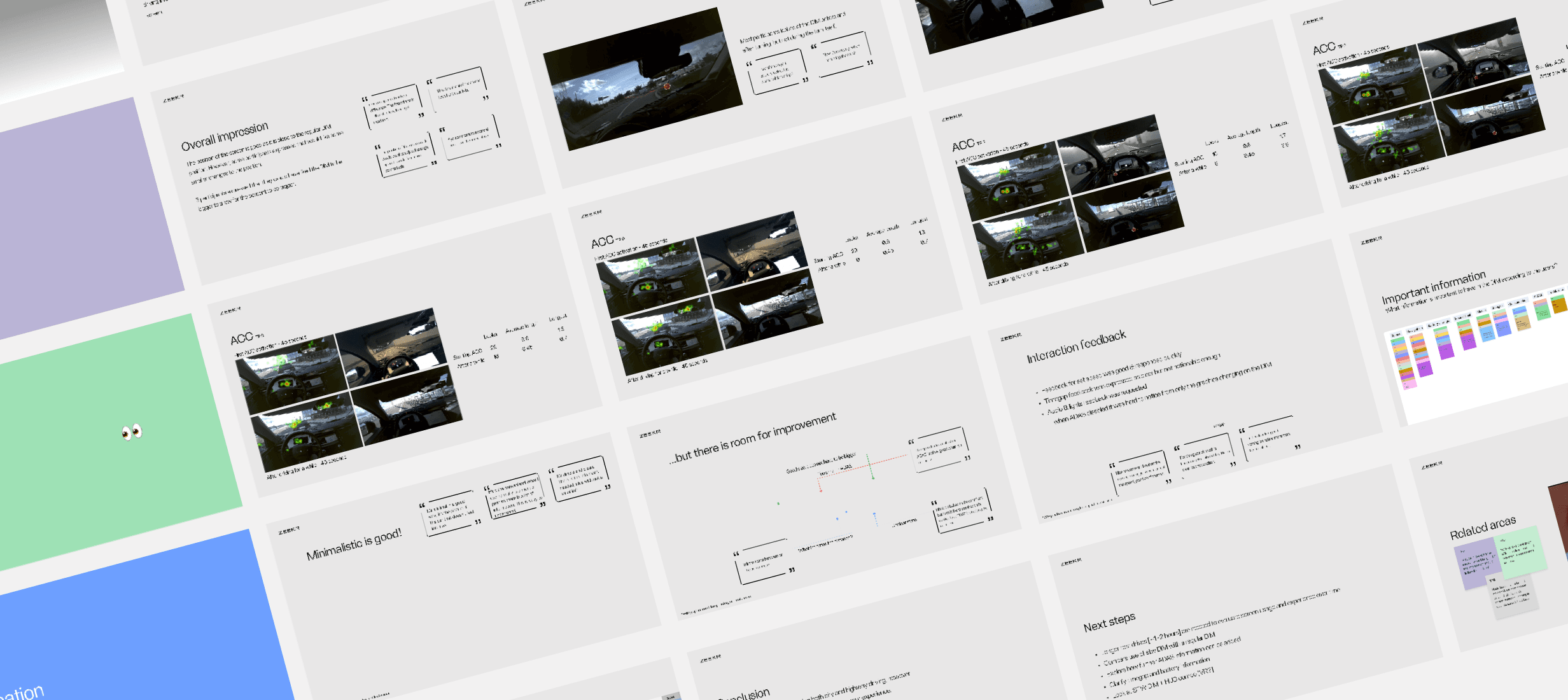
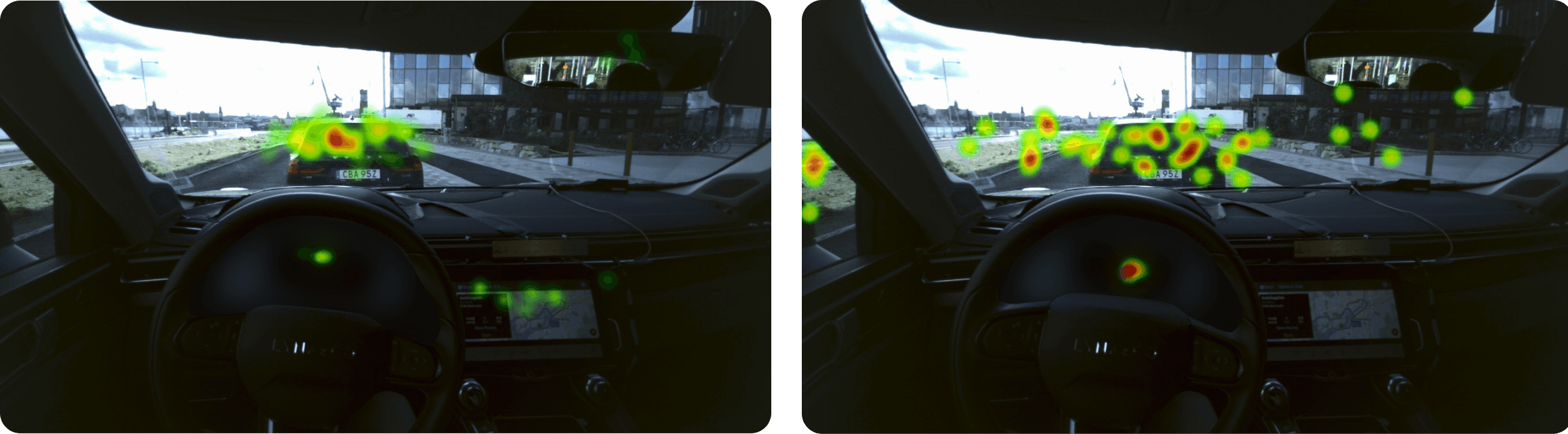
From the eye tracking we could also create heat maps that showed the different drivers’ gaze pattern during the test drives. If the hotspots was very spread out across the information cluster it would tell us that the drivers’ had needed to search a lot for information. When analysing the heat maps we could see that the hotspots were largely focused on one or a few clear areas .
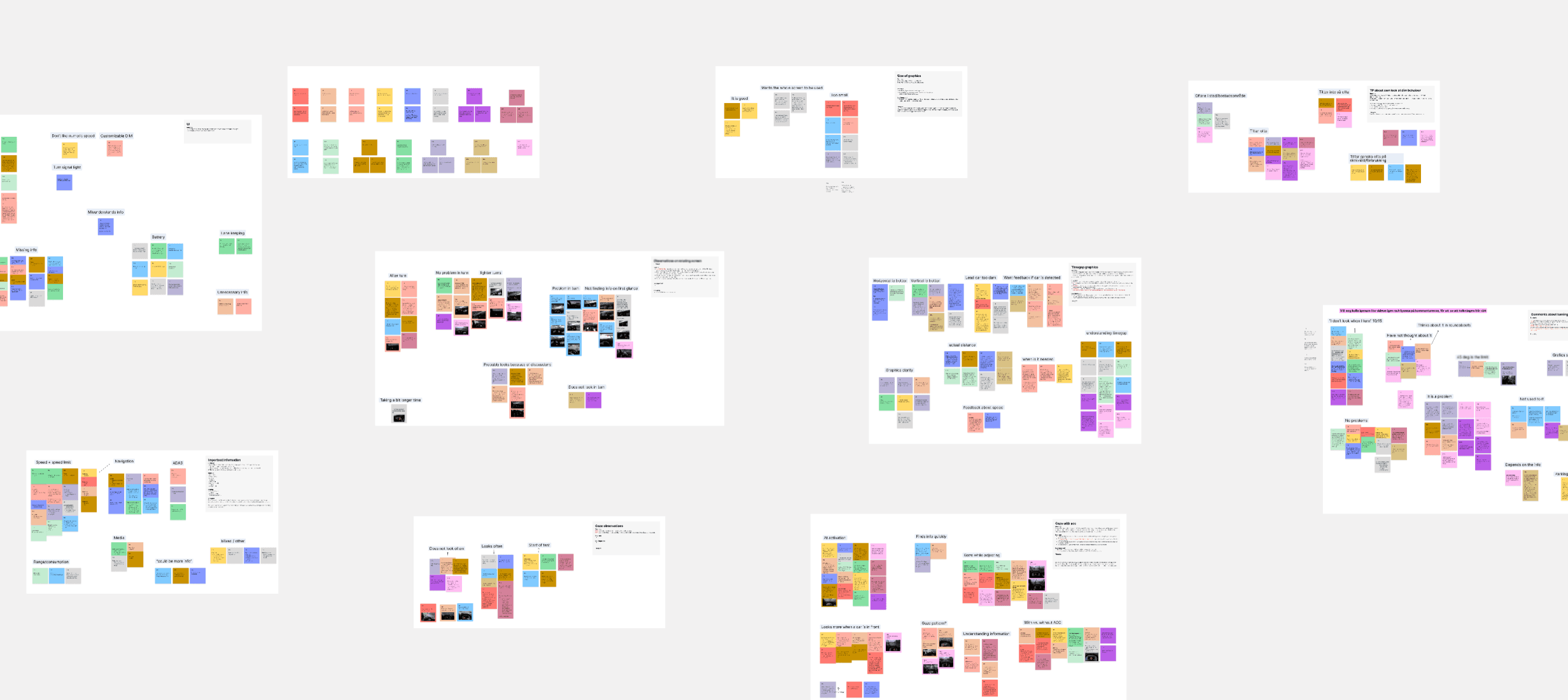
This data, in combination with qualitative input from drivers’ during the test, gave us a positive indication that we were on the right track.
From the eye tracking we could also create heat maps that showed the different drivers’ gaze pattern during the test drives. If the hotspots was very spread out across the information cluster it would tell us that the drivers’ had needed to search a lot for information. When analysing the heat maps we could see that the hotspots were largely focused on one or a few clear areas .
This data, in combination with qualitative input from drivers’ during the test, gave us a positive indication that we were on the right track.
Outcome
Outcome
The research validated the concept's viability, showing strong user acceptance and no significant usability issues. The eye tracking data provided specific parameters for screen usability, while user feedback confirmed that information clarity wasn't compromised.
I delivered a comprehensive recommendation report covering optimal screen position, minimum size requirements, and legal compliance considerations. This report created a strong foundation for future development decisions and still serves as a base for discussions and design decisions today.
The research validated the concept's viability, showing strong user acceptance and no significant usability issues. The eye tracking data provided specific parameters for screen usability, while user feedback confirmed that information clarity wasn't compromised.
I delivered a comprehensive recommendation report covering optimal screen position, minimum size requirements, and legal compliance considerations. This report created a strong foundation for future development decisions and still serves as a base for discussions and design decisions today.